
Introduction
Background chatter, clacking keyboards, a dog barking mid-call. These are the everyday sounds that turn a routine business call into a frustrating one.
In Jabra's 2024 survey of 2,000 knowledge workers across the US, UK, France, and Germany, 47% said noise kept them from focusing, and 55% said poor call audio increased their stress. [1]
USB headsets remain a practical wired option for desks, softphones, and laptops. But "noise cancelling" gets used loosely.
It can mean the microphone cleans up what the other person hears, or the earcups block out what you hear. Sometimes it means both. Sometimes it means neither, despite the marketing.
This guide breaks down what the technology actually does, compares wired USB headset options by workplace, and lists the specifications worth checking before you buy.
Key Takeaways
- A noise-cancelling microphone quiets what customers and colleagues hear from you; ANC and passive isolation quiet what you hear from the room
- Confirm USB-A/USB-C ports, OS support, and UC-platform compatibility before ordering, not after
- Wired USB headsets suit contact centers, shared desks, and remote teams that want to skip battery management
- Teams buying in bulk should weigh standardization and support terms, not just per-unit price
What Noise Cancellation Means in a USB Headset
"Noise cancelling" on a spec sheet can refer to three genuinely different technologies. Mixing them up is the single most common mistake buyers make.
Microphone NC, ANC, and Passive Isolation Aren't the Same Thing
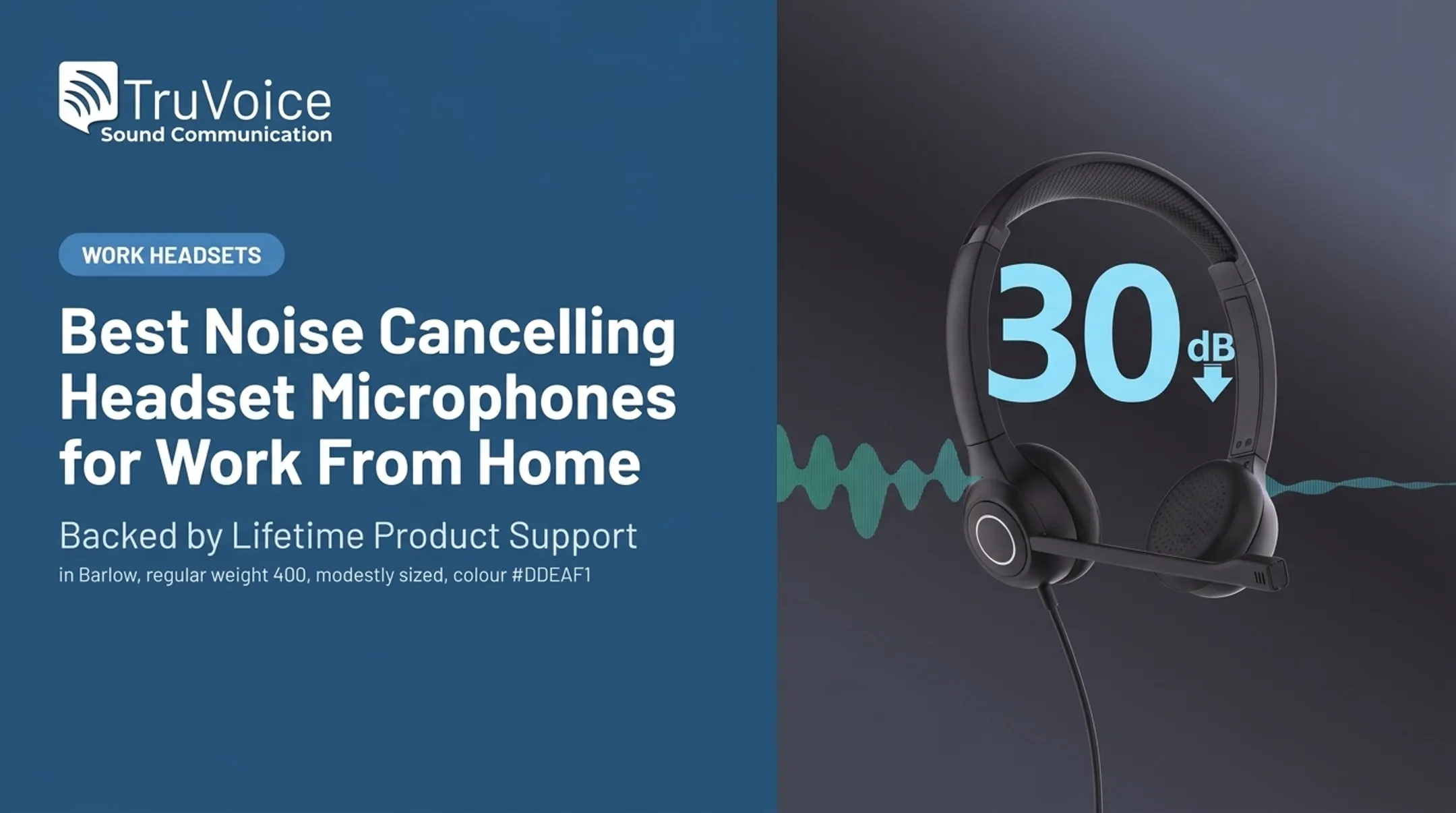
According to Jabra's own explainer on the topic, a noise-cancelling microphone uses multiple microphones and signal processing so the person on the other end of the call hears the speaker clearly, not the office around them.
Active noise cancellation (ANC) works on the wearer's side. Microphones detect ambient sound and the headset generates an opposing sound wave to cancel it out. That method works best on steady, low-frequency noise like HVAC hum.
Passive isolation is simpler still: ear cushions and a closed-back design physically block sound. It tends to handle irregular, higher-frequency noise better than ANC does.
| Mechanism | Who benefits | Best for |
|---|---|---|
| Microphone noise cancellation | The person you're calling | Keyboard clatter, nearby conversations transmitted through your mic |
| Active noise cancellation (ANC) | You, the wearer | Steady background hum, HVAC systems, office drone |
| Passive isolation | You, the wearer | Irregular noise, sudden interruptions, general focus |
A headset can have an excellent noise-cancelling microphone with no ANC in the earcups at all, or the reverse. TruVoice's own HD-100 and HD-750 models, for example, lead with an ultra noise-cancelling microphone for call clarity, while models like the Jabra Evolve2 55 pair ANC with dual noise-cancelling microphones for both sides of the call.
Matching the Feature to the Room
The right combination depends entirely on where the headset gets used:
- Open contact center: microphone NC matters most, since dozens of agents are talking simultaneously and callers need a clean signal
- Home office: ANC or passive isolation helps with household noise, but positioning the mic correctly still matters more than any chip
- Quiet private office: neither feature carries much weight; comfort and call controls matter more
No headset removes every sound. Microphone placement, headset fit, software settings, room acoustics, and how far the speaker sits from the noise source all shape the real-world result. Manufacturer claims are a starting point, not a guarantee.
Best Noise Cancelling USB Headset Options by Use Case
Wired USB Headsets for Contact Centers and High-Volume Calling
High-call-volume environments need a headset that survives an eight-hour shift and doesn't fail mid-call. Prioritize:
- A boom microphone with documented background-noise reduction
- Inline mute and volume controls that work without software
- Durable, serviceable construction (replaceable ear cushions, boom, cable)
- A warranty that covers recurring bulk deployment, not just individual units
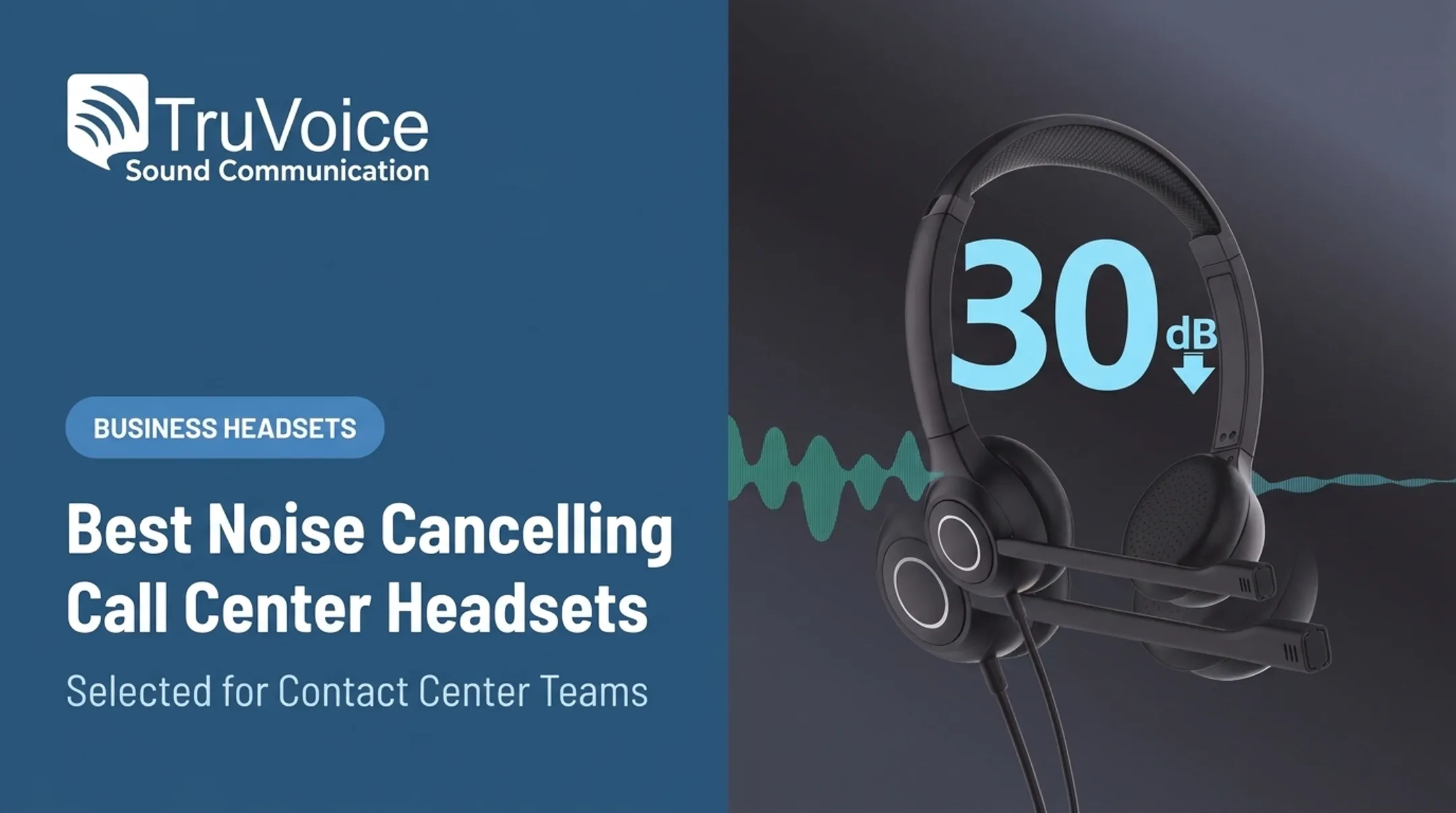
Models like the Jabra Engage 50 II use three MEMS microphones and pair with Engage+ software that flags background noise or silence directly on the agent's screen. TruVoice's HD-750, built with a die-cast aluminum frame and an ultra noise-cancelling microphone, covers the same all-day, high-turnover use case for less.

USB Headsets for Open Offices and Shared Workspaces
Open offices create two competing problems: colleagues need to hear you clearly on calls, and you need to tune out everyone around you. Look for:
- Strong microphone-side noise reduction (so your voice, not the office, comes through)
- Stereo or over-ear passive isolation, or ANC where budget allows
- A busy-light or visible mute indicator to signal availability to deskmates
Steady HVAC drone responds well to ANC. Sudden bursts, like a nearby conversation or a dropped stapler, are handled better by passive isolation. The Poly Blackwire 8225 covers both, combining an Acoustic Fence noise-cancelling microphone with hybrid ANC across four digital microphones.
USB Headsets for Remote and Hybrid Workers
Remote setups favor simplicity. Plug-and-play USB-C, inline controls, and all-day comfort matter more than premium ANC. A wired headset also has real advantages here:
- No pairing issues across laptop, phone, and headset
- No battery to charge before an important call
- Simpler IT support when the same model works across sites
The trade-off is mobility. A wired connection limits how far you can move from the desk, so cable length and routing matter for anyone who paces during calls.
USB Headsets for Small Offices and Budget-Conscious Teams
For smaller teams, total ownership cost beats sticker price. Compare purchase price against:
- Included accessories (adapter cables, carrying pouch)
- Return terms and warranty length
- Compatibility with existing desk phones and computers
- Ongoing support availability
TruVoice can help small offices standardize on one model with product-selection guidance and bulk pricing—useful when you don't have a dedicated IT buyer reviewing every spec sheet.
How to Choose the Right USB Headset
Check USB-A, USB-C, and Device Compatibility
USB-A and USB-C are physically different connectors, and not every "USB-C" headset carries audio the same way. The USB-IF's own specification notes that audio support isn't guaranteed consistently across every host and device combination. [3] Before ordering:
- Confirm which ports your computers, docking stations, and thin clients actually have
- Check whether the headset needs an adapter, includes both connector types, or relies on a separate control module
- Verify compatibility with Windows, macOS, and ChromeOS as applicable, plus Microsoft Teams, Zoom, Google Meet, RingCentral, or your specific softphone

Evaluate Microphone and Audio Performance
Marketing terms like "wideband" or "HD audio" describe a technology, not a guarantee of clarity. Check for:
- Directional or noise-cancelling microphone design
- Sidetone (so callers can hear their own voice at a natural level)
- Boom adjustability and mute behavior
- Documented performance against keyboard, fan, and speech noise, from manufacturer specs or independent testing where available
Compare Comfort and Wearing Style
Comfort decisions come down to a few trade-offs:
- Mono versus stereo audio
- On-ear versus over-ear fit
- Headband pressure and cushion material
A highly isolating headset helps focus, but it can also block colleagues, alerts, or a supervisor calling your name. That trade-off matters for anyone who needs situational awareness during a shift.
Assess Controls, Setup, and Manageability
Inline mute, volume, call-answer, and busy-light controls should work immediately after connection, without a software install. For IT teams managing multiple desks or remote employees, centralized configuration and consistent models across the team cut support tickets.
Compare Cost, Support, and Purchasing Protection
Price alone is a poor comparison point. Weigh warranty coverage, return policy, replacement parts, and expected service life together. TruVoice backs its headset range with a 30-day money-back guarantee on website orders and lifetime product support on every unit. Confirm current terms before a large order.
Teams buying in bulk can also request TruVoice's bulk-rate pricing and technical support directly.
Where Noise Cancelling USB Headsets Work Best
Where Noise Canceling USB Headsets Work Best
Contact Centers and Customer-Service Teams
Microphone noise reduction helps agents sound clearer to customers on a busy floor, while ANC or passive isolation helps agents concentrate.
Noise isn't just a comfort issue. NIOSH research on call and dispatch center operators notes that background noise can push workers to raise headset volume, and that feedback or interference can create sudden volume spikes. [4] Supervisors should check volume limits and hearing-safety practices alongside any noise-canceling feature.

Corporate Offices and Video-Conferencing Rooms
Consistent USB connectivity and call controls matter most for open-plan desks and shared workstations, where multiple people may use the same equipment across a workday. Background-noise reduction on the mic side keeps hybrid meetings intelligible even when a few desks are on calls at once.
Home Offices and Remote Work
Household noise, whether it's a delivery at the door, kids, or a pet, calls for a headset that combines a solid microphone with reasonable isolation. Headset technology complements a good setup; it doesn't replace proper mic positioning or a quieter corner of the house.
Training, Onboarding, and Support Environments
Trainers and supervisors managing multiple trainees need durable, easy-to-set-up headsets with consistent controls across every desk. Standardized models reduce the troubleshooting burden for whoever supports the floor.
Frequently Asked Questions
What is the best USB headset with a noise-cancelling microphone?
There's no single best model. Match the headset to your work environment, USB connector, call platform, and comfort needs. Use the use-case comparisons above to shortlist options.
Is there a USB headset that cancels background noise?
It depends what "cancel" means. A noise-cancelling microphone reduces noise others hear from you. ANC and passive isolation reduce noise you hear. Many headsets combine both, but they solve different problems.
Which USB headsets with noise cancellation include a microphone?
Most business USB headsets include a built-in boom or integrated microphone. Still, verify the microphone design, noise-reduction claims, connector type, and softphone compatibility for the specific model before buying.
Are there any noise-cancelling headphones with USB-C audio?
Some models carry genuine USB-C audio, while others use USB-C purely for charging a wireless headset. Always check the product specifications rather than assuming from the connector type alone.
Is there such a thing as wired noise-cancelling headphones?
Yes. Wired headsets can offer passive isolation, a noise-cancelling microphone, ANC, or a combination of these. A USB connection also makes setup for computer calls simpler, since there's no pairing or charging involved.
Sources: [1] Jabra, "Making the Workplace Sound Better" report (2024) [2] Jabra Blog, "Noise cancellation in headsets: What exactly is it?" [3] USB-IF, USB Audio Device Class Specification [4] NIOSH, "Reducing Noise Hazards for Call and Dispatch Center Operators" (2011)