
A bad one shows up fast: static-filled calls, sore ears by lunch, or a microphone that picks up the entire floor's chatter. The best call center headset isn't the priciest pair of headphones on the shelf. It's the one that nails microphone clarity, blocks background noise, fits comfortably for eight-hour shifts, and plays nicely with your phone system.
This guide compares five current headset options across wired, wireless, USB, Bluetooth, and DECT categories, then walks through how to pick the right one for a single agent or a full deployment.
Key Takeaways
- Prioritize mic performance, all-day comfort, and compatibility over music-listening features.
- Wired USB and QD suit fixed agent stations; Bluetooth and DECT fit mobile or hybrid teams.
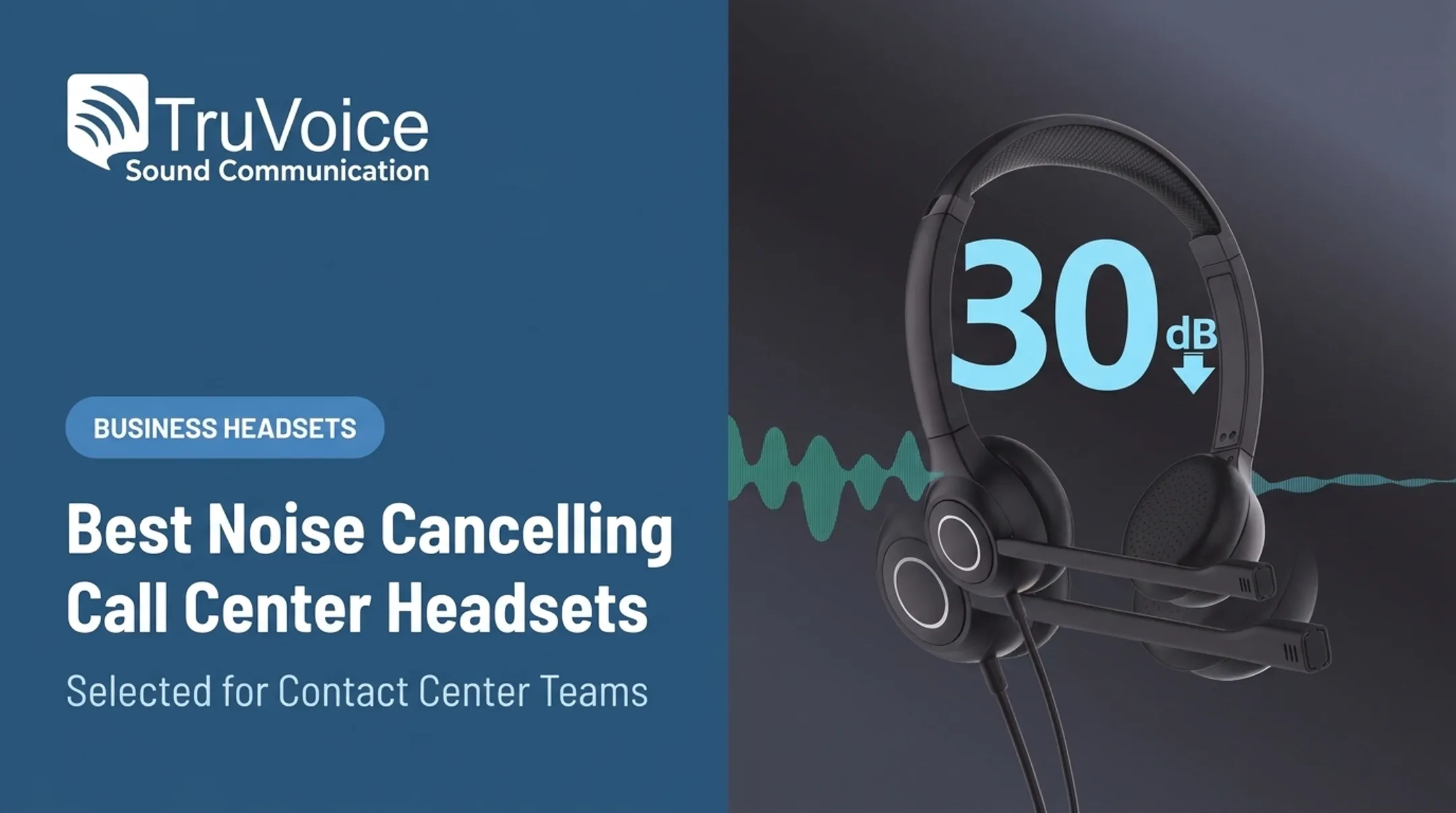
- Mic noise cancellation protects callers; ANC mainly helps the agent hear better.
- Confirm desk phone, softphone, and UC compatibility before ordering.
- Compare warranty, support, and bulk pricing—not just sticker price.
Overview of Call Center Headsets in the US Market
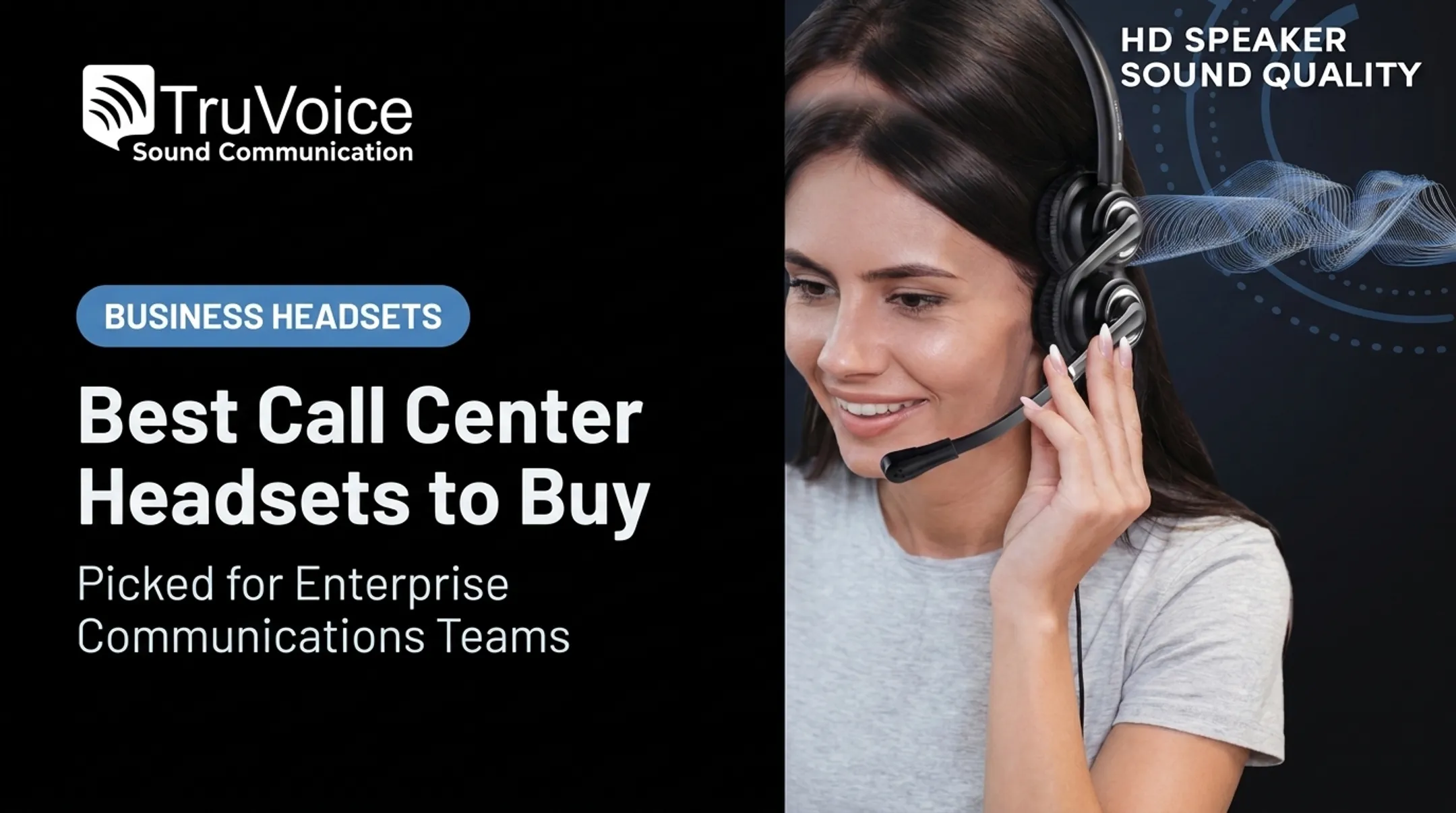
A professional call center headset is built around one job: clean voice transmission. That means a boom microphone positioned near the mouth, physical call controls, noise management, and compatibility with a desk phone or software-based calling platform. It's a different animal from a pair of consumer earbuds.
You'll typically run into these formats:
- Mono (single-ear) – common on 24/7 call center floors so agents can hear coworkers and floor alerts
- Stereo (dual-ear) – better for noisy open offices or agents who need to focus on the call alone
- Wired USB – plug-and-play, no charging, ideal for fixed desks
- Quick Disconnect (QD) – connects to desk phones and amplifiers, standard in many legacy call center setups
- Bluetooth – lightweight wireless option for hybrid or mobile workers
- DECT wireless – longer range and stronger security, built for office roaming
Remote and hybrid work aren't going anywhere. According to Bureau of Labor Statistics 2025 annual averages, 22.4% of people at work in the US teleworked at some point during the year.
That figure is broad labor data, not headset-specific. Still, it explains why contact centers need gear that works on the floor and in a home office.
There's no single "best" headset. A noisy 200-seat floor needs aggressive microphone noise rejection. A remote agent needs USB plug-and-play simplicity. A trainer needs a dual-headset setup to listen and coach live.
Compare the options below against your environment, phone system, and support needs before you commit to a fleet purchase.

Top Call Center Headsets and Headphones for 2026
Each option here was evaluated on voice quality, microphone noise control, comfort, connectivity, platform compatibility, durability, and support. Always double-check current pricing and stock before placing a bulk order, since availability shifts.
| Headset | Connection | Best For | Price Range |
|---|---|---|---|
| TruVoice VoicePro 80 | Wired USB-A/USB-C | Budget-conscious standardization | $44.96 |
| Jabra Engage 50 II | Wired USB | Noisy floors needing top mic clarity | Varies by SKU |
| Yealink WH66/WH64 | DECT wireless | Roaming agents, multi-device setups | $189–$269 |
| Poly EncorePro 520 | QD | Legacy amplifier/desk-phone ecosystems | Varies by SKU |
| EPOS HMD 46-31-II | Wired | Premium wired agent stations | Varies by SKU |
TruVoice Telecom VoicePro 80
TruVoice Telecom has spent over 30 years in the telecom equipment business, building a headset range aimed at call centers, offices, and remote workers who want reliable gear without paying brand-name markups. The VoicePro 80 Premium Teams Compatible Wired USB Headset (MPN T02100) is its flagship agent-floor option.
The VoicePro 80 is a dual-ear, wired USB headset with USB-A and USB-C connectors, a noise-canceling microphone, and in-line call controls for answering, muting, and adjusting volume without touching a keyboard.
Comparison snapshot:
- Connection: Wired USB-A/USB-C
- Compatibility: Microsoft Teams certified, works across major softphones
- Wearing style: Over-the-head, dual-ear
- Price: $44.96 sale ($59.95 regular)
- Warranty: Lifetime product support across TruVoice's entire headset range
- Returns: 30-day no-questions-asked returns on website orders
- Bulk pricing: Discounted rates on volume orders
TruVoice also carries the Agent AW50 Mono DECT Headset and BT75 Bluetooth headset with USB dongle for teams needing wireless mobility instead.
Jabra Engage 50 II
The Jabra Engage 50 II is a wired USB mono or stereo headset purpose-built for contact center desks running softphones or UC platforms. It's one of the more well-documented options on the market, with manufacturer specs backing up nearly every claim.
Three MEMS microphones handle call noise reduction and improve speech-to-text accuracy, according to Jabra's official technical specifications. The mono version weighs just 45 grams, with angled cushions and a maze-shaped earcup pattern designed to reduce pressure points during long shifts.
Comparison snapshot:
- Connection: USB-A or USB-C, wired
- Microphone: Three-mic array with call noise reduction
- Design: 45g mono / 65g stereo
- Durability: Stress-tested boom-arm rotation and impact resistance
- Compatibility: Certified variants for Teams, Zoom, Cisco, and other UC platforms
- Warranty: 3 years
- Best fit: Noisy floors where microphone clarity is the top priority
One limitation: certifications vary by SKU, so confirm the exact model number matches your platform before ordering in bulk.
Yealink WH66/WH64 DECT Wireless Headset
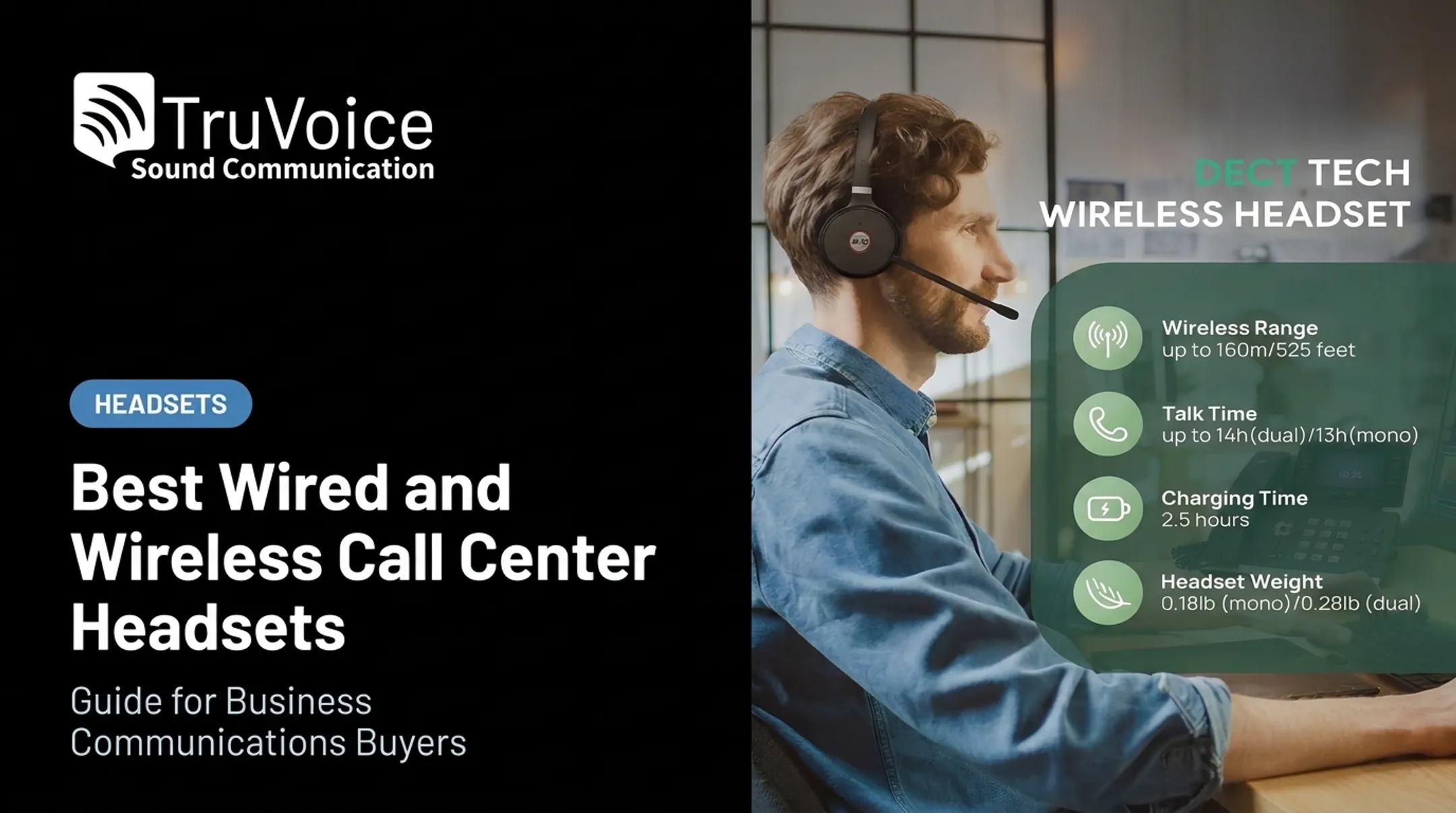
For teams that need agents to step away from the desk without dropping a call, Yealink's DECT wireless lineup is worth a look. The WH66 workstation model offers a wireless range up to 525 feet (160 meters), dual noise-canceling microphones with Acoustic Shield technology, and talk time up to 14 hours in dual-ear mode or 13 hours mono.
TruVoice carries this DECT/Bluetooth wireless family, including the WH64 Duo model (MPN 1208673), priced between $189 and $269 depending on configuration.
Comparison snapshot:
- Connection: DECT wireless with USB base, plus dual Bluetooth support
- Range: Up to 525 feet
- Microphone: Dual mic, Acoustic Shield noise reduction
- Battery: Up to 14 hours talk time, roughly 2.5-hour charge
- Compatibility: Microsoft Teams certified, UC variants available
- Best fit: Hybrid offices where agents roam or share workstations
One trade-off with any DECT setup: you're managing a charging routine, which wired USB headsets simply don't require.
Poly EncorePro 520
The Poly EncorePro 520 is a Quick Disconnect (QD) headset built for standardized call center deployments already running QD amplifiers or desk-phone adapters. At just 74 grams, it's light enough for extended wear.
Its noise-canceling microphone pairs with SoundGuard technology that limits sound exposure below 118 dBA, according to HP Poly's official documentation. That acoustic limit matters when hearing-safety compliance is part of your procurement checklist.
Comparison snapshot:
- Connection: QD, requires a compatible cable or amplifier
- Design: 74g binaural, foam ear cushions
- Microphone: Noise-canceling, SoundGuard acoustic limiting
- Compatibility: UC certified
- Warranty: 2-year limited
- Best fit: Legacy call centers already invested in QD infrastructure
If your floor doesn't already have QD amplifiers or adapters in place, factor that added cost into your comparison.
EPOS HMD 46-31-II
EPOS positions its contact center range around voice pickup clarity and speech-enhancing filter technology, paired with lightweight builds and soft earpads for all-day wear. The HMD 46-31-II is a professional wired model built for agent stations where voice quality is the top priority.
Comparison snapshot:
- Connection: Wired
- Design: Lightweight, soft earpads
- Microphone: Speech-enhancing, noise-filtering technology
- Warranty: 2 years worldwide
- Best fit: Teams prioritizing premium wired voice quality over wireless mobility
EPOS doesn't publish a detailed numeric microphone pickup pattern on its public product pages, so if your procurement process needs that level of documentation, it's worth requesting directly from EPOS or a reseller.

How We Chose the Best Call Center Headsets
Ranking headsets isn't just about reading a spec sheet. This comparison combines manufacturer documentation, independent reviews, and the practical realities of running a busy call center floor.
Microphone performance came first, and it's evaluated separately from speaker-side noise cancellation. These are two different jobs. A headset's microphone determines what the caller hears; ANC only affects what the agent hears.
Five9's own 2026 headset testing process, for instance, tests both caller and agent experience separately, measuring latency and sound clarity, and rating each side on a 1-5 scale. That distinction should drive your buying decision too.
Connection and platform compatibility came next, ahead of raw sound quality. A headset that sounds incredible but won't answer calls on your desk phone is useless. We checked:
- Desk phone and softphone compatibility, including required EHS (electronic hook switch) accessories
- USB, Bluetooth, and DECT connectivity requirements
- UC platform certification (Teams, Zoom, Cisco, and others)
- QD adapter and amplifier requirements where relevant
All-day usability mattered just as much. Weight, cushion material, headband adjustment, and glasses compatibility all affect whether an agent can wear a headset comfortably for a full eight-hour shift. Heat buildup and pressure points are real complaints on long calls, not minor details.
Ownership factors rounded out the evaluation: durability, replaceable parts, warranty length, and how responsive the supplier is when something breaks.

Common Buyer Mistakes to Avoid
- Buying consumer headphones without a dedicated boom microphone
- Ignoring connector compatibility (QD vs. USB vs. 3.5mm)
- Choosing wireless without planning a charging routine
- Comparing list price instead of total cost, including replacement parts
- Deploying a model fleet-wide without testing it against real floor noise first
For larger contact centers, run a small pilot before standardizing. Give a handful of agents the shortlisted models, then collect feedback on call clarity, comfort, durability, and how easy the headset is to clean and maintain. That real-world data beats any spec sheet.
Conclusion
There's no universal "best" call center headset for 2026. The right choice depends on your phone system, floor noise level, agent mobility needs, budget, and how much support you expect from your supplier.
Before you commit to a bulk order, compare these factors side by side:
- Microphone performance
- All-day comfort
- Connectivity with your phone system
- Durability
- Warranty terms
Run a small pilot with a few agents first.
TruVoice Telecom works with US call centers, offices, and remote teams on headset selection. Buyers get cost-conscious guidance, bulk purchasing support, lifetime product support, and a 30-day no-questions-asked return policy on eligible website orders.
If you're not sure which model fits your phone system and team, reach out to TruVoice for a recommendation before you buy.
Frequently Asked Questions
What are the best headphones for a call center?
Professional call center headsets with a dedicated boom microphone, reliable noise rejection, all-day comfort, and verified phone or softphone compatibility outperform ordinary consumer headphones. Compare the ranked options above based on your noise environment and budget.
What are the best budget headphones for office calls?
Compare affordable wired USB or QD business headsets rather than choosing by price alone. Verify microphone quality, connector compatibility, comfort, warranty, and replacement-part availability before you buy.
Should a call center use wired or wireless headsets?
Wired headsets offer reliability and simpler ownership; wireless offers mobility and convenience. The right pick depends on how much agents move, your desk-phone setup, charging logistics, and deployment scale.
Is active noise cancellation necessary for a call center headset?
ANC improves what the agent hears, while microphone noise cancellation controls what the caller hears. In a busy contact center, microphone noise control usually matters more, though ANC can help agents concentrate.
How do I know if a headset will work with my call center phone system?
Check your exact desk-phone or softphone model, connector type, USB or Bluetooth requirements, and UC platform support. Some setups also need a cable, amplifier, or electronic hook-switch accessory.
Are call center headsets better than regular headphones for phone calls?
Business headsets typically have a closer-positioned microphone, physical call controls, longer-wear designs, and dedicated support that consumer headphones lack. A regular headphone only works if its microphone and compatibility genuinely meet your call needs.